
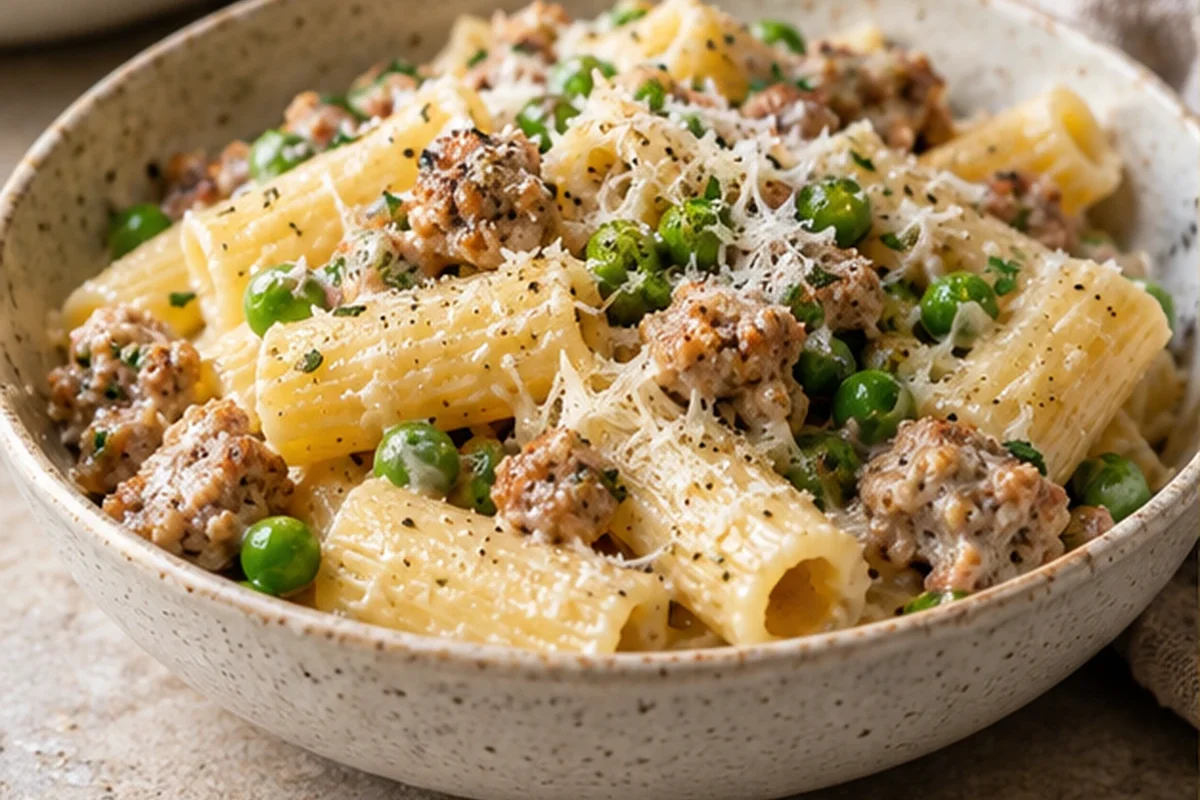
Creamy Turkey Sausage Pasta with Peas
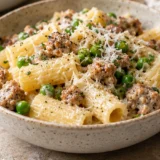
Creamy Turkey Sausage Pasta with Peas brings rigatoni, browned turkey sausage, sweet peas, garlic, Parmesan, parsley, and a light cream sauce into one practical dinner. Turkey sausage brings savory seasoning to a creamy pasta without needing a heavy sauce. Sweet peas add color and gentle sweetness, and rigatoni catches the Parmesan sauce in its ridges and hollow centers. The method is approachable, but the small details about heat, timing, and ingredient order make the finished texture much more dependable.
This version of turkey sausage pasta with peas is written for an ordinary home kitchen and makes six servings. Reserve pasta water before draining because its starch helps the sauce cling. Keep the skillet below a hard boil after adding half-and-half, then add Parmesan gradually for a smooth finish. Read the full method before starting, prepare every ingredient, and keep the measured liquids nearby so the cooking process stays calm.
The recipe is flexible enough for a weeknight yet complete enough to share. The seasoning is balanced rather than aggressive, the vegetables remain visible, and the final fresh ingredient gives the richer elements a clean finish.
Why You’ll Love Turkey Sausage Pasta With Peas
The appeal comes from contrast: savory protein, well-cooked vegetables, and a sauce or seasoning mixture that ties the plate together. Rigatoni, browned turkey sausage, sweet peas, garlic, parmesan, parsley, and a light cream sauce give every serving color, texture, and enough substance for dinner.
The recipe also keeps cleanup reasonable. Most of the work happens in one pot, skillet, pan, or baking dish, and the suggested sides are optional. Leftovers portion easily for lunch or a second dinner.
Ingredients for Turkey Sausage Pasta With Peas
Each ingredient has a clear role. Understanding those roles makes substitutions safer and helps the recipe keep its intended balance.
- Main ingredients: The heart of this recipe is rigatoni, browned turkey sausage, sweet peas, garlic, Parmesan, parsley, and a light cream sauce. Keep pieces close in size so they cook at the same pace and are easy to serve.
- Aromatics and seasoning: Onion, garlic, herbs, spices, citrus, or vinegar build layers of flavor. Measure concentrated seasonings first, because it is easier to add a little more at the end than to correct an oversalted dish.
- Cooking liquid and sauce: Use the stated amount as a starting point. Ingredients release moisture as they cook, while pasta, rice, or starch may absorb it. Keep a small amount of broth or pasta water nearby for a final adjustment.
- Fresh finish: Herbs, lemon, lime, or cheese are most expressive when added near the end. They brighten the cooked flavors and make the finished plate look intentional.
Measure the seasonings before cooking and taste only mixtures that have not touched raw meat. The uncooked sauce may seem slightly bold because the main ingredients soften and dilute it as they cook.
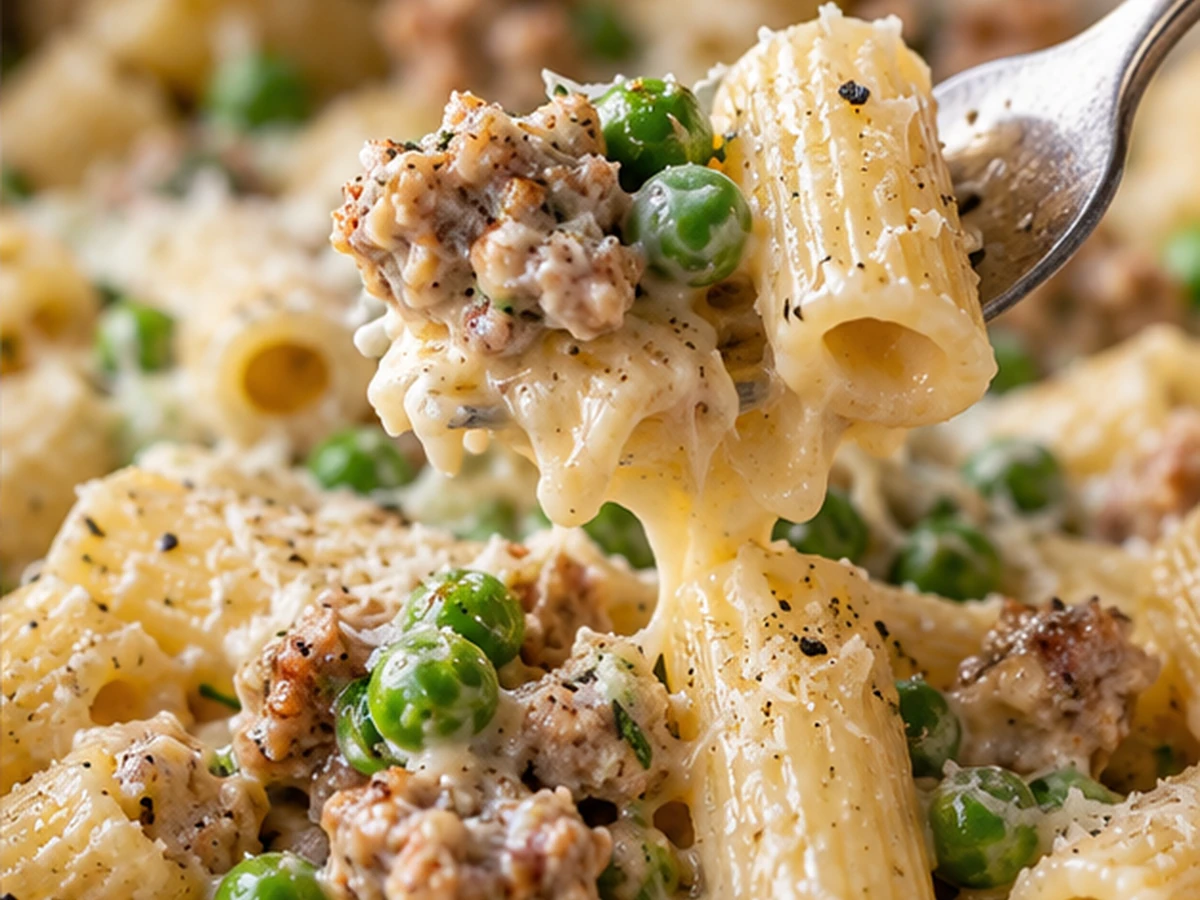
How to Make Turkey Sausage Pasta With Peas
The stovetop method works best when ingredients enter in the correct order. Prepare the components first, then follow the visual signs in each step instead of relying only on the clock.
Boil the pasta
Cook rigatoni in salted water until just shy of al dente, reserving 1 cup pasta water.
Brown the sausage
Heat oil in a wide skillet and cook sausage, breaking it into small pieces.
Add aromatics
Stir in shallot for 3 minutes, then garlic and pepper flakes for 30 seconds.
Build the sauce
Add broth and simmer for 3 minutes, then lower the heat and stir in half-and-half.
Finish the pasta
Add rigatoni and peas, tossing with Parmesan and enough pasta water to make a glossy sauce.
Season
Add black pepper, lemon juice, parsley, and salt to taste.
Before serving, taste the completed dish and make one adjustment at a time. A pinch of salt strengthens flavor, a spoonful of liquid loosens texture, and a small splash of acid can balance richness.
Practical Stovetop Tips
- Salt pasta water moderately because sausage and Parmesan are salty.
- Cook pasta just shy of al dente.
- Break sausage into bite-size pieces.
- Lower heat before adding cream.
- Add Parmesan gradually while tossing.
- Use pasta water to loosen the sauce.
Cookware, burner strength, ovens, and ingredient moisture vary. Use the stated time as a guide and pay attention to browning, tenderness, sauce consistency, and safe temperature. Those signs are more reliable than the clock alone.
Variations and Ingredient Swaps
Use penne, shells, or bow ties in place of rigatoni. Broccoli florets can replace peas when added to the pasta water for the final three minutes. Whole milk can replace half-and-half with a thinner result.
Keep the total volume similar when substituting. If the new ingredient releases more water, reduce another liquid slightly. If it is salty or strongly seasoned, begin with less added salt and correct the flavor only after cooking.
Serving, Storage, and Reheating
Serve while the textures are at their best. A green salad, simple steamed vegetable, warm bread, rice, or fruit can round out the meal, but choose a side that complements rather than competes with the main flavors.
Cool leftovers promptly and refrigerate them in airtight containers for up to three days. Reheat covered portions over low heat or in the microwave until steaming hot. Add a spoonful of broth or water when pasta, rice, or sauce has tightened in the refrigerator.
FAQ
Can I prepare ingredients ahead?
Yes. Chop sturdy vegetables and measure seasonings up to one day ahead. Refrigerate perishable ingredients separately and begin cooking from properly chilled food.
How do I avoid overcooking the vegetables?
Cut pieces evenly, follow the staged timing in the recipe, and check near the early end of the stated range. Quick-cooking vegetables should remain bright and hold their shape.
Can I change the protein?
A similar fully cooked sausage or an appropriate lean protein can work, but cooking time and safe internal temperature may change. Use an instant-read thermometer when raw meat is involved.
What if the sauce is too thick?
Add warm broth, pasta water, or water one tablespoon at a time. Stir after each addition so the sauce loosens without becoming watery.
What if the dish tastes flat?
Adjust in small steps with salt, black pepper, citrus, vinegar, herbs, or Parmesan, depending on the recipe. A fresh acidic finish often restores balance.
How should leftovers be stored?
Cool promptly and refrigerate in airtight containers for up to three days. Reheat gently until steaming hot, adding a spoonful of liquid when needed.
Can I freeze it?
Freeze cooled portions for up to one month when the vegetables and sauce are freezer-friendly. Thaw overnight in the refrigerator before reheating.
Creamy Turkey Sausage Pasta with Peas is easiest when the ingredients are prepared before the heat begins. Follow the order, watch the texture, and use the fresh finishing ingredients to bring the whole dinner into balance.
Nutrition per serving: 560 calories · 32g protein · 64g carbs · 20g fat
Why This Works
- A complete dinner with rigatoni, browned turkey sausage, sweet peas, garlic, Parmesan, parsley, and a light cream sauce.
- The method keeps preparation and cleanup practical.
- Careful timing protects the main textures.
- The seasoning is balanced and easy to adjust.
- Leftovers reheat well for another meal.
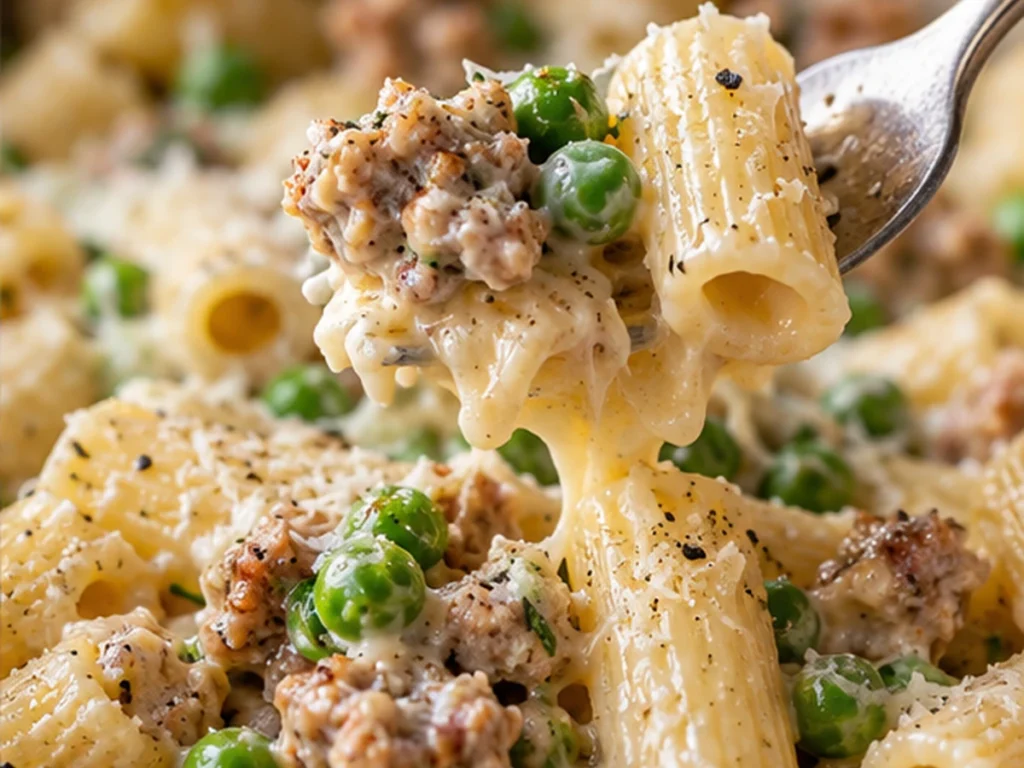
Ingredients
To make this Creamy Turkey Sausage Pasta with Peas, you will need the following ingredients:
- 12 ounces rigatoni
- 1 tablespoon olive oil
- 1 pound lean turkey sausage, casings removed
- 1 small shallot, finely diced
- 3 garlic cloves, minced
- 1 cup low-sodium chicken broth
- 3/4 cup half-and-half
- 1 cup frozen peas
- 3/4 cup finely grated Parmesan
- 1/2 teaspoon black pepper
- 1/4 teaspoon red pepper flakes, optional
- 1 tablespoon lemon juice
- 1/3 cup chopped parsley
- Salt, to taste
Ingredient Notes and Substitutions
A few small changes can adapt this recipe to your taste and to what you already have at home. Here are my best tips:
- Use penne, shells, or bow ties in place of rigatoni. Broccoli florets can replace peas when added to the pasta water for the final three minutes. Whole milk can replace half-and-half with a thinner result. Keep the overall volume similar when substituting. Use low-sodium broth when possible and taste only after the main ingredients are safely cooked.
How to Make Creamy Turkey Sausage Pasta with Peas
Step 1: Boil the pasta
Cook rigatoni in salted water until just shy of al dente, reserving 1 cup pasta water.
Step 2: Brown the sausage
Heat oil in a wide skillet and cook sausage, breaking it into small pieces.
Step 3: Add aromatics
Stir in shallot for 3 minutes, then garlic and pepper flakes for 30 seconds.
Step 4: Build the sauce
Add broth and simmer for 3 minutes, then lower the heat and stir in half-and-half.
Step 5: Finish the pasta
Add rigatoni and peas, tossing with Parmesan and enough pasta water to make a glossy sauce.
Step 6: Season
Add black pepper, lemon juice, parsley, and salt to taste.
Pro Tips
- Salt pasta water moderately because sausage and Parmesan are salty.
- Cook pasta just shy of al dente.
- Break sausage into bite-size pieces.
- Lower heat before adding cream.
- Add Parmesan gradually while tossing.
- Use pasta water to loosen the sauce.
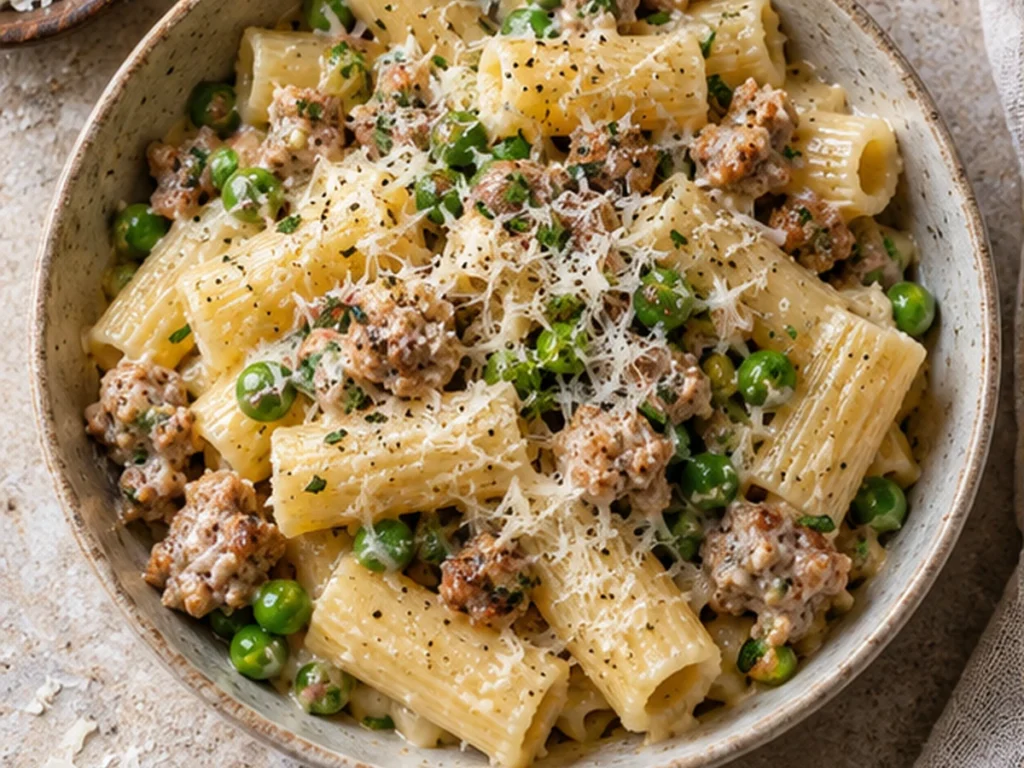
Serving Suggestions
Round out the meal with one of these easy pairings:
- Serve warm in shallow bowls or on plates with the sauce or cooking juices distributed evenly. Add a simple salad, bread, rice, or steamed vegetable when you want a larger meal.
Storage and Reheating
Cool promptly and refrigerate in airtight containers for up to 3 days. Reheat gently until steaming hot, adding a spoonful of broth or water if needed. Freeze suitable portions for up to 1 month and thaw overnight in the refrigerator.
FAQs
Can I prepare ingredients ahead?
Yes. Prep sturdy vegetables and seasonings one day ahead and refrigerate separately.
How do I know it is done?
Follow the texture cues in the instructions and verify safe meat temperature when applicable.
Can I substitute the protein?
Yes, but adjust timing and verify the safe temperature for the replacement.
What if the sauce is too thick?
Add warm broth or water one tablespoon at a time.
How should I reheat leftovers?
Reheat gently until steaming hot, adding a splash of liquid if needed.
Can I freeze it?
Freeze suitable cooled portions for up to one month and thaw in the refrigerator.
You May Also Like

Final Thoughts
Creamy Turkey Sausage Pasta with Peas is a practical, flavorful dinner. Prepare the ingredients first, follow the cooking order, and finish with the fresh herbs or acid listed in the recipe.
Creamy Turkey Sausage Pasta with Peas
Description
Turkey sausage pasta with peas combines browned sausage, rigatoni, sweet peas, garlic, Parmesan, and a light creamy sauce for an easy weeknight dinner.
Ingredients
Instructions
Step 1: Boil the pasta
Cook rigatoni in salted water until just shy of al dente, reserving 1 cup pasta water.
Step 2: Brown the sausage
Heat oil in a wide skillet and cook sausage, breaking it into small pieces.
Step 3: Add aromatics
Stir in shallot for 3 minutes, then garlic and pepper flakes for 30 seconds.
Step 4: Build the sauce
Add broth and simmer for 3 minutes, then lower the heat and stir in half-and-half.
Step 5: Finish the pasta
Add rigatoni and peas, tossing with Parmesan and enough pasta water to make a glossy sauce.
Step 6: Season
Add black pepper, lemon juice, parsley, and salt to taste.
Pro Tips
- Salt pasta water moderately because sausage and Parmesan are salty.
- Cook pasta just shy of al dente.
- Break sausage into bite-size pieces.
- Lower heat before adding cream.
- Add Parmesan gradually while tossing.
- Use pasta water to loosen the sauce.
Notes
Nutrition is an estimate and varies by ingredient brands and portion size. Cook raw poultry to 165°F and ground turkey to 165°F.
Nutrition (per serving, estimated)
- Serving Size: 1 1/2 cups
- Calories: 560
- Sugar: 7g
- Sodium: 760mg
- Fat: 20g
- Saturated Fat: 9g
- Carbohydrates: 64g
- Fiber: 5g
- Protein: 32g
- Cholesterol: 100mg