
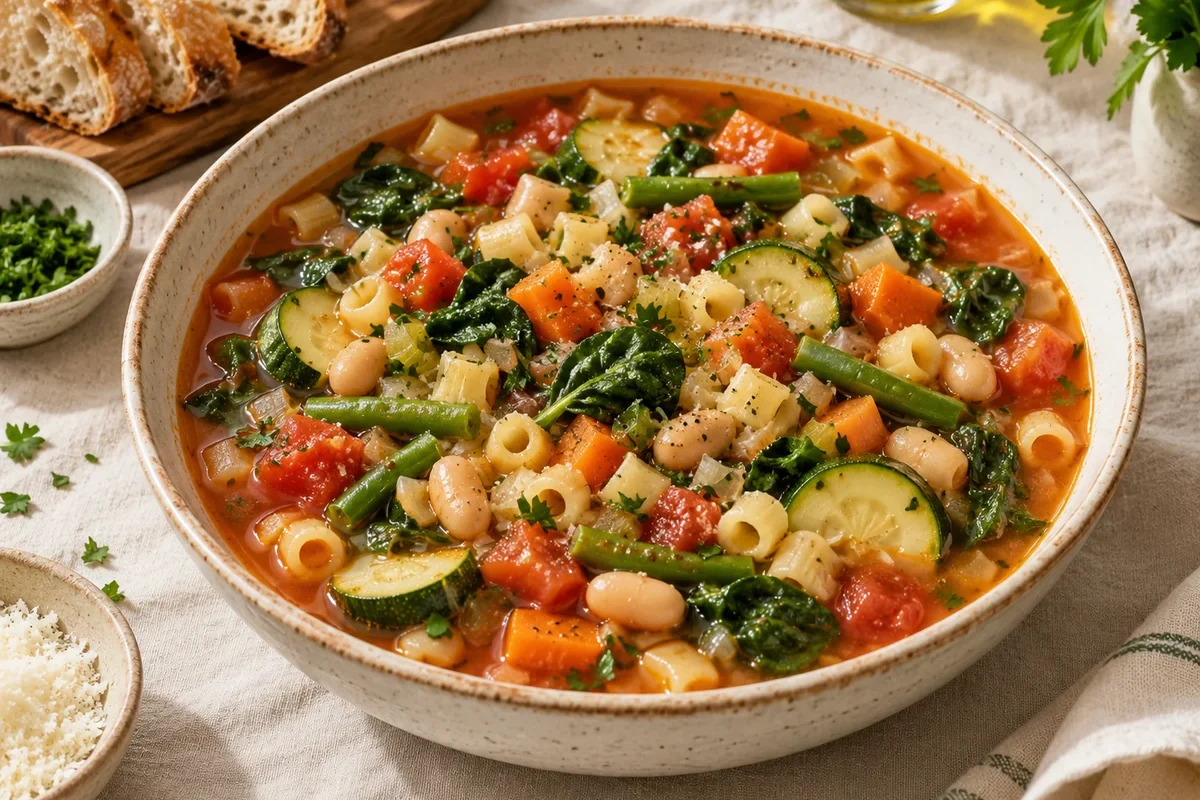
Garden Vegetable Minestrone with White Beans
Garden Vegetable Minestrone with White Beans turns white beans, tomatoes, zucchini, green beans, carrots, spinach, and small pasta in an herb broth into a complete dinner with a clear cooking order. The recipe is designed for an ordinary home kitchen, with visual cues that make the timing easier to judge and practical choices that keep the finished texture balanced.
This original vegetable minestrone with white beans recipe makes six servings. Stagger the vegetables so every one keeps the right texture. If storing the soup, cook pasta separately and add it to bowls to prevent it from absorbing too much broth. Read the method once before beginning, prepare the ingredients, and keep measured liquids and seasonings close to the stove or work surface.
The result is substantial enough for dinner without needing a complicated list of side dishes. Richer ingredients are balanced with vegetables, herbs, citrus, or vinegar, and the recipe includes straightforward storage and reheating guidance for leftovers.
Why You’ll Love Vegetable Minestrone With White Beans
The recipe combines white beans, tomatoes, zucchini, green beans, carrots, spinach, and small pasta in an herb broth in a way that gives every serving color, substance, and contrast. The cooking sequence protects the most delicate ingredients while giving sturdy vegetables, grains, pasta, pastry, or meat enough time to develop.
Preparation is organized rather than fussy. Most of the active work happens in one main pot, pan, or baking dish, and every component has a reason to be included. The method also explains when to rely on color, tenderness, sauce consistency, and safe temperature instead of watching the clock alone.
Ingredients for Vegetable Minestrone With White Beans
Understanding what each group of ingredients contributes makes the recipe easier to follow and helps substitutions keep the intended balance.
- Main components: The center of the recipe is white beans, tomatoes, zucchini, green beans, carrots, spinach, and small pasta in an herb broth. Cut matching ingredients to a similar size so they cook at an even pace and remain easy to serve.
- Aromatics and seasonings: Onion, garlic, herbs, spices, and browned bits form the flavor base. Measure concentrated seasonings first, then make final adjustments only after the main ingredients are safely cooked.
- Liquid and texture: Broth, milk, wine, pasta water, or another cooking liquid carries flavor and controls consistency. Add the listed amount first, then adjust by the spoonful near the end rather than making the dish watery.
- Fresh finish: Parsley, dill, lemon, vinegar, cheese, or another finishing ingredient is most expressive when added late. This final step brings definition to slow-cooked or creamy flavors.
Measure the seasonings before cooking. Taste only mixtures that have not contacted raw meat, poultry, or seafood, and wait until the main components are safely cooked before making the final salt adjustment.
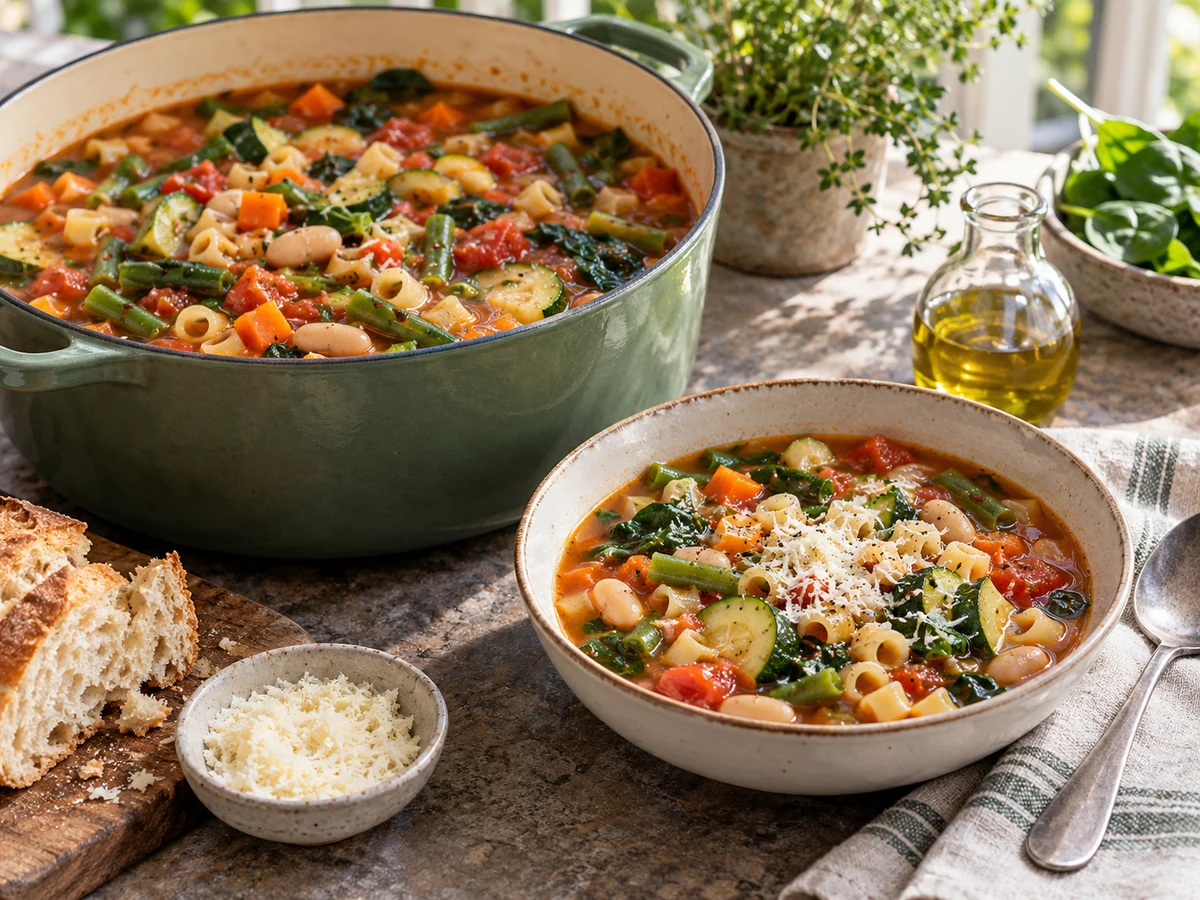
How to Make Vegetable Minestrone With White Beans
The stovetop method works best when ingredients are ready before the heat begins. Follow the staged order and use the visual signs in each step to decide when to move forward.
Soften the base
Heat oil and cook onion, carrots, and celery for 8 minutes.
Build tomato flavor
Add garlic, tomato paste, oregano, and basil and cook for 1 minute.
Simmer the soup
Add tomatoes, broth, and beans and simmer for 15 minutes.
Cook the pasta
Add pasta and green beans and cook according to the pasta package.
Add tender vegetables
Stir in zucchini for the final 5 minutes and spinach for the final minute.
Finish the pot
Add vinegar and parsley, adjust seasoning, and serve.
Before serving, make one adjustment at a time. A small pinch of salt strengthens flavor, warm liquid loosens texture, and a measured splash of acid can balance richness. Stir, taste, and pause before adding more.
Practical Stovetop Tips
- Cut vegetables uniformly.
- Cook tomato paste until fragrant.
- Use small pasta shapes.
- Add zucchini near the end.
- Store pasta separately for leftovers.
- Finish with vinegar and herbs.
Cookware size, burner strength, ingredient moisture, and oven calibration can change timing. Use the stated range as a guide, but let browning, tenderness, sauce consistency, pastry color, and safe internal temperature determine when the food is ready.
Variations and Ingredient Swaps
Use chickpeas or kidney beans, add cabbage with the broth, or choose gluten-free pasta. A Parmesan rind can simmer in the broth for a non-vegan version.
When making a swap, keep the total quantity close to the original. Reduce another liquid slightly if the replacement releases more moisture. Begin with less salt when using cured meat, cheese, canned broth, or another seasoned ingredient.
Serving Suggestions
Serve the dish while its main textures are at their best. A crisp green salad, steamed vegetable, warm bread, rice, or simply cut fruit can round out the meal. Choose one uncomplicated side so the main recipe remains the focus.
Warm shallow bowls help soups, stews, pasta, and risotto stay comfortable at the table. Baked dishes and pastry benefit from a brief rest before slicing, which gives the filling time to settle and makes portions neater.
Storage and Reheating
Cool leftovers promptly. Divide a large batch into shallow containers so it chills efficiently, then refrigerate for up to three days. Do not leave cooked food at room temperature for more than two hours.
Reheat only the amount you plan to eat. Use low heat on the stove or moderate microwave intervals, stirring between rounds, until the food is steaming hot. Add a spoonful of broth, water, milk, or pasta water when starch has absorbed moisture overnight.
Frequently Asked Questions
Can I prepare the ingredients ahead?
Yes. Chop sturdy vegetables, measure dry seasonings, and prepare sauces up to one day ahead. Refrigerate perishable ingredients in separate airtight containers and keep raw meat away from ready-to-eat food.
How do I know the recipe is done?
Use the texture cues in the method as well as an instant-read thermometer when meat or seafood is involved. Ground beef should reach 160°F, poultry and turkey 165°F, and seafood 145°F.
Can I make a substitution?
Yes. Use chickpeas or kidney beans, add cabbage with the broth, or choose gluten-free pasta. A Parmesan rind can simmer in the broth for a non-vegan version. Keep the total volume similar and adjust cooking time when the replacement has a different density or safe temperature.
What should I do if the sauce or broth is too thick?
Add warm broth, water, milk, or reserved pasta water one tablespoon at a time. Stir well after each addition so the texture loosens gradually without losing flavor.
How can I correct a flat flavor?
First check salt, then add a small amount of the recipe's fresh finishing ingredient. Lemon, vinegar, herbs, Parmesan, or black pepper can restore balance without making the dish heavy.
How should leftovers be stored?
Cool leftovers promptly and refrigerate them in an airtight container for up to three days. Reheat gently until steaming hot, adding a spoonful of liquid if the sauce or starch has tightened.
Can I freeze it?
Freeze cooled portions for up to one month when the dish contains freezer-friendly vegetables and sauce. Thaw overnight in the refrigerator. Dairy sauces and potatoes may soften slightly after freezing.
Garden Vegetable Minestrone with White Beans is most manageable when the preparation is finished before cooking begins. Follow the sequence, check texture and temperature, and use the fresh finishing ingredient to bring the whole dinner into balance.
Nutrition per serving: 385 calories · 16g protein · 65g carbs · 8g fat
Why This Works
- A complete dinner with white beans, tomatoes, zucchini, green beans, carrots, spinach, and small pasta in an herb broth.
- The method keeps preparation organized and practical.
- Clear timing and texture cues make each stage easier to judge.
- The seasoning is balanced and simple to adjust.
- Leftovers store and reheat well for another meal.
Ingredients
To make this Garden Vegetable Minestrone with White Beans, you will need the following ingredients:
- 2 tablespoons olive oil
- 1 medium onion, diced
- 3 carrots, diced
- 2 celery stalks, diced
- 4 garlic cloves, minced
- 2 tablespoons tomato paste
- 1 teaspoon dried oregano
- 1 teaspoon dried basil
- 1 can (28 ounces) diced tomatoes
- 6 cups low-sodium vegetable broth
- 2 cans cannellini beans, drained
- 1 cup small pasta
- 1 zucchini, diced
- 8 ounces green beans, cut into 1-inch pieces
- 3 cups baby spinach
- 1 tablespoon red wine vinegar
- 1/3 cup chopped parsley
Ingredient Notes and Substitutions
A few small changes can adapt this recipe to your taste and to what you already have at home. Here are my best tips:
- Use chickpeas or kidney beans, add cabbage with the broth, or choose gluten-free pasta. A Parmesan rind can simmer in the broth for a non-vegan version. Keep the overall volume close to the original and adjust cooking time for the replacement ingredient.
How to Make Garden Vegetable Minestrone with White Beans
Step 1: Soften the base
Heat oil and cook onion, carrots, and celery for 8 minutes.
Step 2: Build tomato flavor
Add garlic, tomato paste, oregano, and basil and cook for 1 minute.
Step 3: Simmer the soup
Add tomatoes, broth, and beans and simmer for 15 minutes.
Step 4: Cook the pasta
Add pasta and green beans and cook according to the pasta package.
Step 5: Add tender vegetables
Stir in zucchini for the final 5 minutes and spinach for the final minute.
Step 6: Finish the pot
Add vinegar and parsley, adjust seasoning, and serve.
Pro Tips
- Cut vegetables uniformly.
- Cook tomato paste until fragrant.
- Use small pasta shapes.
- Add zucchini near the end.
- Store pasta separately for leftovers.
- Finish with vinegar and herbs.

Serving Suggestions
Round out the meal with one of these easy pairings:
- Serve warm with an uncomplicated salad, vegetable, bread, rice, or fruit when a larger meal is needed. Rest baked dishes briefly before slicing.
Storage and Reheating
Cool promptly and refrigerate in airtight containers for up to 3 days. Reheat gently until steaming hot, adding a spoonful of liquid if needed. Freeze suitable portions for up to 1 month and thaw overnight in the refrigerator.
FAQs
Can I prepare ingredients ahead?
Yes. Prep sturdy vegetables and seasonings one day ahead and refrigerate separately.
How do I know it is done?
Follow the texture cues and verify the safe internal temperature when meat or seafood is involved.
Can I make substitutions?
Yes, but keep total volume similar and adjust timing for the replacement.
What if the sauce is too thick?
Add warm liquid one tablespoon at a time.
How should I reheat leftovers?
Reheat gently until steaming hot and add a splash of liquid if needed.
Can I freeze it?
Freeze suitable cooled portions for up to one month and thaw in the refrigerator.
You May Also Like


Final Thoughts
Garden Vegetable Minestrone with White Beans is a practical dinner. Prepare the ingredients first, follow the cooking order, and finish with the fresh herbs or acid listed in the recipe.

Garden Vegetable Minestrone with White Beans
Description
Make Garden Vegetable Minestrone with White Beans with clear steps, reliable timing, practical swaps, storage tips, and cozy flavor for an easy family dinner.
Ingredients
Instructions
Step 1: Soften the base
Heat oil and cook onion, carrots, and celery for 8 minutes.
Step 2: Build tomato flavor
Add garlic, tomato paste, oregano, and basil and cook for 1 minute.
Step 3: Simmer the soup
Add tomatoes, broth, and beans and simmer for 15 minutes.
Step 4: Cook the pasta
Add pasta and green beans and cook according to the pasta package.
Step 5: Add tender vegetables
Stir in zucchini for the final 5 minutes and spinach for the final minute.
Step 6: Finish the pot
Add vinegar and parsley, adjust seasoning, and serve.
Pro Tips
- Cut vegetables uniformly.
- Cook tomato paste until fragrant.
- Use small pasta shapes.
- Add zucchini near the end.
- Store pasta separately for leftovers.
- Finish with vinegar and herbs.
Notes
Nutrition is an estimate and varies by brands and portion size. Cook ground beef to 160°F, poultry and turkey to 165°F, and seafood to 145°F.
Nutrition (per serving, estimated)
- Serving Size: 1 1/2 cups
- Calories: 385
- Sugar: 12g
- Sodium: 630mg
- Fat: 8g
- Saturated Fat: 1g
- Carbohydrates: 65g
- Fiber: 12g
- Protein: 16g
- Cholesterol: 0mg