
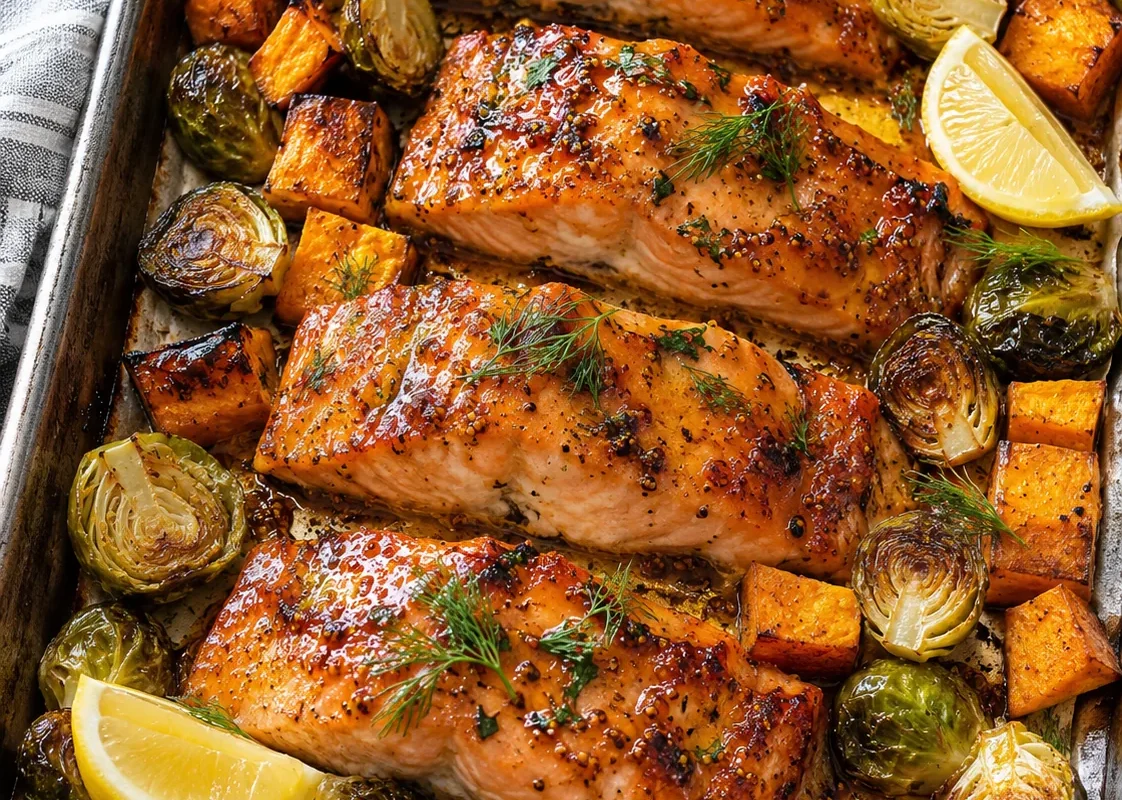
Sheet Pan Maple Dijon Salmon with Sweet Potatoes
Maple Dijon Salmon brings maple Dijon glazed salmon roasted with Brussels sprouts, sweet potatoes, lemon, and dill into one satisfying dinner. This original version uses a clear cooking order, everyday equipment, and practical visual cues so the finished texture is easier to judge without relying on the clock alone.
The recipe makes 4 servings and fits an ordinary home kitchen. Giving the vegetables a head start allows the salmon to stay moist while everything finishes on one pan. Read the method once before beginning, measure the seasonings, and prepare the vegetables or toppings so the active cooking stays calm and the main ingredients do not overcook while you search for the next item.
Why This Maple Dijon Salmon Works
The recipe combines maple Dijon glazed salmon roasted with Brussels sprouts, sweet potatoes, lemon, and dill so every serving has substance, color, and contrast. The cooking sequence gives sturdy ingredients enough time to soften while protecting delicate herbs, greens, noodles, cheese, or fresh toppings from unnecessary heat.
Preparation is organized rather than complicated. Most of the work happens in one main cooker, skillet, pot, or baking dish, and each ingredient has a clear purpose. Browning builds savory depth, measured liquid controls texture, and a short rest or fresh finish brings the final plate into balance.
Ingredients for Maple Dijon Salmon
The exact amounts below are designed to keep the seasoning, moisture, and serving size consistent. Read through the list before substituting so the replacement does not add too much liquid or salt.
- 1 pound sweet potatoes, cut into 3/4-inch cubes
- 12 ounces Brussels sprouts, halved
- 2 tablespoons olive oil, divided
- 1 teaspoon kosher salt, divided
- 1/2 teaspoon black pepper
- 4 salmon fillets, 5 ounces each
- 3 tablespoons pure maple syrup
- 2 tablespoons Dijon mustard
- 1 tablespoon lemon juice
- 1 garlic clove, grated
- 1/2 teaspoon smoked paprika
- 1 lemon, cut into wedges
- 2 tablespoons chopped dill
Measure the seasonings first and keep uncooked garnishes separate from raw meat. Taste only after the meat is safely cooked. When using canned broth, beans, sauce, cheese, or soy sauce, begin with the listed salt and adjust at the end because those ingredients vary by brand.
- Main ingredients: The center of this dish is maple Dijon glazed salmon roasted with Brussels sprouts, sweet potatoes, lemon, and dill. Keep similar pieces close in size so they cook evenly and remain easy to serve.
- Aromatics and spices: Onion, garlic, herbs, dried spices, and browned bits create the flavor base. Measure concentrated seasonings before heating the pan, then make final salt adjustments only after meat is safely cooked and the sauce or broth has reduced.
- Liquid and texture: Broth, sauce, or water carries seasoning and controls consistency. Begin with the listed amount. Near the end, adjust by the spoonful instead of pouring in a large amount that can make the dish watery.
- Fresh finish: Lemon, lime, parsley, cilantro, scallions, or another fresh ingredient is most expressive when added late. This final step adds contrast to slow-cooked, cheesy, or savory flavors.
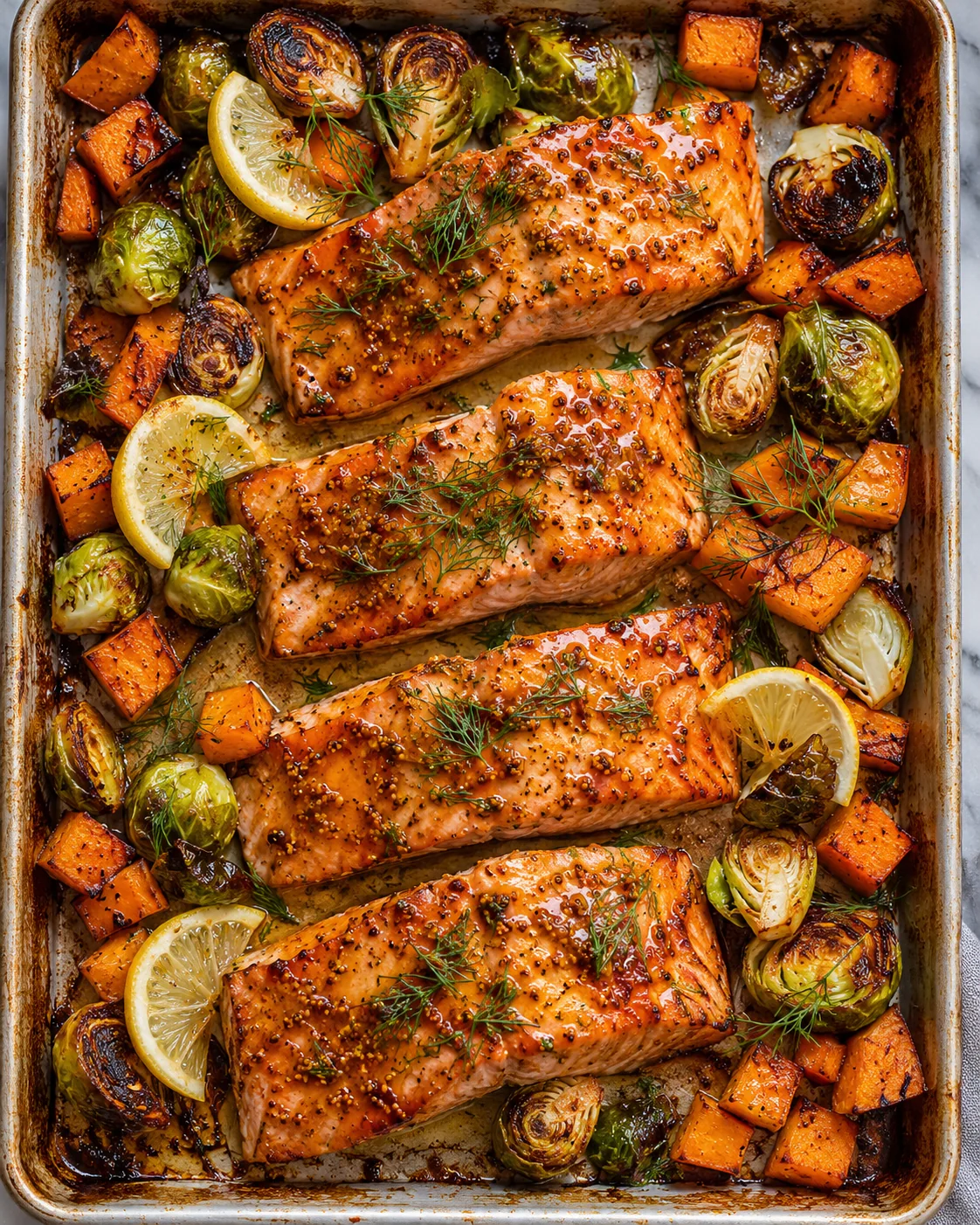
How to Make Maple Dijon Salmon
The sheet pan method works best when the ingredients are ready before the heat begins. Follow the staged order and use color, tenderness, sauce consistency, and safe temperature to decide when each step is complete.
Start the vegetables
Heat the oven to 425°F, toss sweet potatoes and Brussels sprouts with oil, salt, and pepper, and roast for 15 minutes.
Mix the glaze
Whisk maple syrup, Dijon, lemon juice, garlic, smoked paprika, and remaining oil.
Prepare the salmon
Pat salmon dry and season lightly with the remaining salt and pepper.
Turn the vegetables
Stir the vegetables and clear four spaces on the sheet pan.
Add salmon
Place salmon skin side down and brush generously with the maple Dijon glaze.
Finish roasting
Roast 10 to 14 minutes until salmon flakes easily and reaches 145°F.
Glaze once more
Brush with a little reserved clean glaze during the final two minutes if desired.
Serve
Finish with lemon wedges and dill and divide the roasted vegetables among plates.
Before serving, make one adjustment at a time. A small pinch of salt strengthens flavor, warm liquid loosens a tight sauce or broth, and a measured squeeze of citrus can balance richness. Stir, taste, and pause before adding more.
Pro Tips and Troubleshooting
- Cut vegetables evenly.
- Give vegetables a head start.
- Pat salmon dry.
- Keep raw-contact glaze separate.
- Cook salmon to 145°F.
- Do not overcrowd the pan.
Cookware size, burner strength, ingredient moisture, and oven calibration can change timing. Use the stated range as a guide, but let browning, tenderness, sauce consistency, and safe internal temperature determine when the food is ready. If a pan is browning too quickly, lower the heat before adding extra liquid.
When the dish seems watery, give it the uncovered cooking or resting time described in the method. When it seems dry, add warm liquid gradually. Large corrections are difficult to reverse, while several small adjustments preserve the seasoning and texture.
Variations and Ingredient Substitutions
Use broccoli florets instead of Brussels sprouts, replace sweet potatoes with small potatoes, or use honey in place of maple syrup.
Keep the total quantity close to the original when making a swap. Reduce another liquid slightly if the replacement releases more moisture. Begin with less added salt when using cured meat, cheese, canned sauce, seasoned broth, miso, or soy sauce, then correct the flavor only after everything is fully cooked.
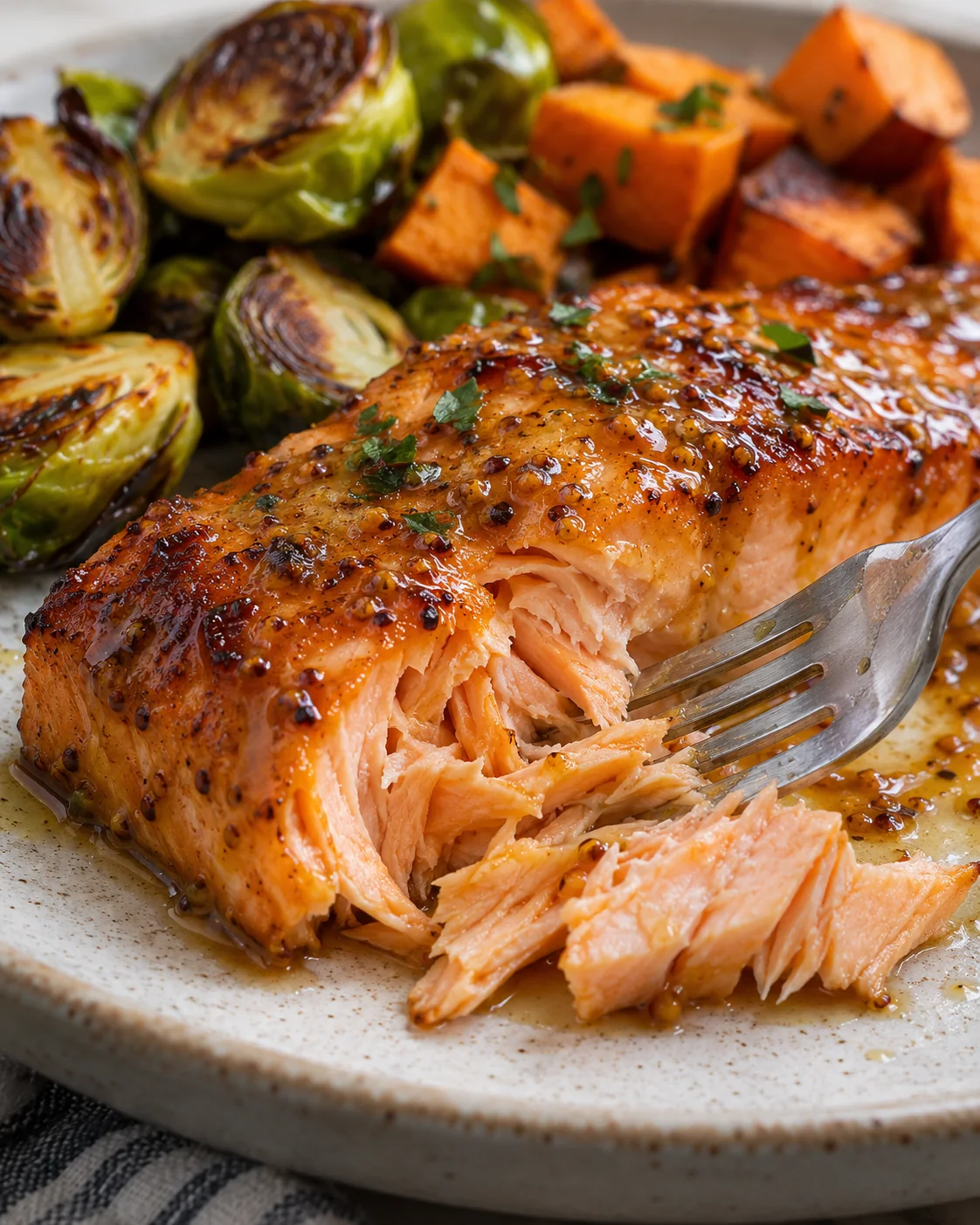
Serving, Storage, and Reheating
Serve the meal while its main textures are at their best. A crisp salad, steamed vegetable, simple fruit, warm bread, or a small bowl of beans can round out dinner without competing with the recipe. Use warm bowls for soup and noodles, and allow layered or baked dishes to rest before cutting clean portions.
Cool leftovers promptly and divide a large batch into shallow containers so it chills efficiently. Refrigerate for up to three days. Store delicate herbs, avocado, sprouts, crunchy toppings, and extra citrus separately so they stay fresh rather than wilting in the warm food.
Reheat only the amount you plan to eat. Use low heat on the stove or moderate microwave intervals, stirring between rounds, until the food is steaming hot. Add a spoonful of broth or water when rice, noodles, tortillas, or sauce has absorbed moisture overnight.
FAQ
Can I prepare the ingredients ahead?
Yes. Chop sturdy vegetables, measure dry seasonings, and prepare sauces up to one day ahead. Refrigerate perishable ingredients separately and keep raw meat away from ready-to-eat garnishes.
How do I know the recipe is safely cooked?
Use the texture cues in the method and an instant-read thermometer. Ground beef should reach 160°F, while chicken and turkey should reach 165°F in the thickest part.
Can I make substitutions?
Yes. Use broccoli florets instead of Brussels sprouts, replace sweet potatoes with small potatoes, or use honey in place of maple syrup. Keep the overall volume similar and account for a different safe temperature or cooking time when changing the protein.
What if the sauce or broth is too thick?
Add warm broth or water one tablespoon at a time. Stir after each addition and pause before adding more so the texture loosens without becoming thin.
How can I correct a flat flavor?
Check the salt first, then add a small amount of the recipe's fresh finishing ingredient. Citrus, vinegar, herbs, scallions, or black pepper can restore definition without making the food heavy.
How should I store and reheat leftovers?
Cool leftovers promptly and refrigerate them in an airtight container for up to three days. Reheat gently until steaming hot, adding a spoonful of liquid when noodles, rice, or sauce has tightened.
Sheet Pan Maple Dijon Salmon with Sweet Potatoes is easiest when the preparation is finished before cooking begins. Follow the sequence, check texture and safe temperature, and use the fresh finishing ingredient to bring the whole dinner into balance.
Nutrition per serving: 520 calories · 37g protein · 44g carbs · 23g fat
Why This Works
- A complete dinner with maple Dijon glazed salmon roasted with Brussels sprouts, sweet potatoes, lemon, and dill.
- Clear texture and temperature cues.
- Practical ingredient substitutions.
- Storage and reheating guidance.

Ingredients
To make this Sheet Pan Maple Dijon Salmon with Sweet Potatoes, you will need the following ingredients:
- 1 pound sweet potatoes, cut into 3/4-inch cubes
- 12 ounces Brussels sprouts, halved
- 2 tablespoons olive oil, divided
- 1 teaspoon kosher salt, divided
- 1/2 teaspoon black pepper
- 4 salmon fillets, 5 ounces each
- 3 tablespoons pure maple syrup
- 2 tablespoons Dijon mustard
- 1 tablespoon lemon juice
- 1 garlic clove, grated
- 1/2 teaspoon smoked paprika
- 1 lemon, cut into wedges
- 2 tablespoons chopped dill
Ingredient Notes and Substitutions
A few small changes can adapt this recipe to your taste and to what you already have at home. Here are my best tips:
- Use broccoli florets instead of Brussels sprouts, replace sweet potatoes with small potatoes, or use honey in place of maple syrup.
How to Make Sheet Pan Maple Dijon Salmon with Sweet Potatoes
Step 1: Start the vegetables
Heat the oven to 425°F, toss sweet potatoes and Brussels sprouts with oil, salt, and pepper, and roast for 15 minutes.
Step 2: Mix the glaze
Whisk maple syrup, Dijon, lemon juice, garlic, smoked paprika, and remaining oil.
Step 3: Prepare the salmon
Pat salmon dry and season lightly with the remaining salt and pepper.
Step 4: Turn the vegetables
Stir the vegetables and clear four spaces on the sheet pan.
Step 5: Add salmon
Place salmon skin side down and brush generously with the maple Dijon glaze.
Step 6: Finish roasting
Roast 10 to 14 minutes until salmon flakes easily and reaches 145°F.
Step 7: Glaze once more
Brush with a little reserved clean glaze during the final two minutes if desired.
Step 8: Serve
Finish with lemon wedges and dill and divide the roasted vegetables among plates.
Pro Tips
- Cut vegetables evenly.
- Give vegetables a head start.
- Pat salmon dry.
- Keep raw-contact glaze separate.
- Cook salmon to 145°F.
- Do not overcrowd the pan.
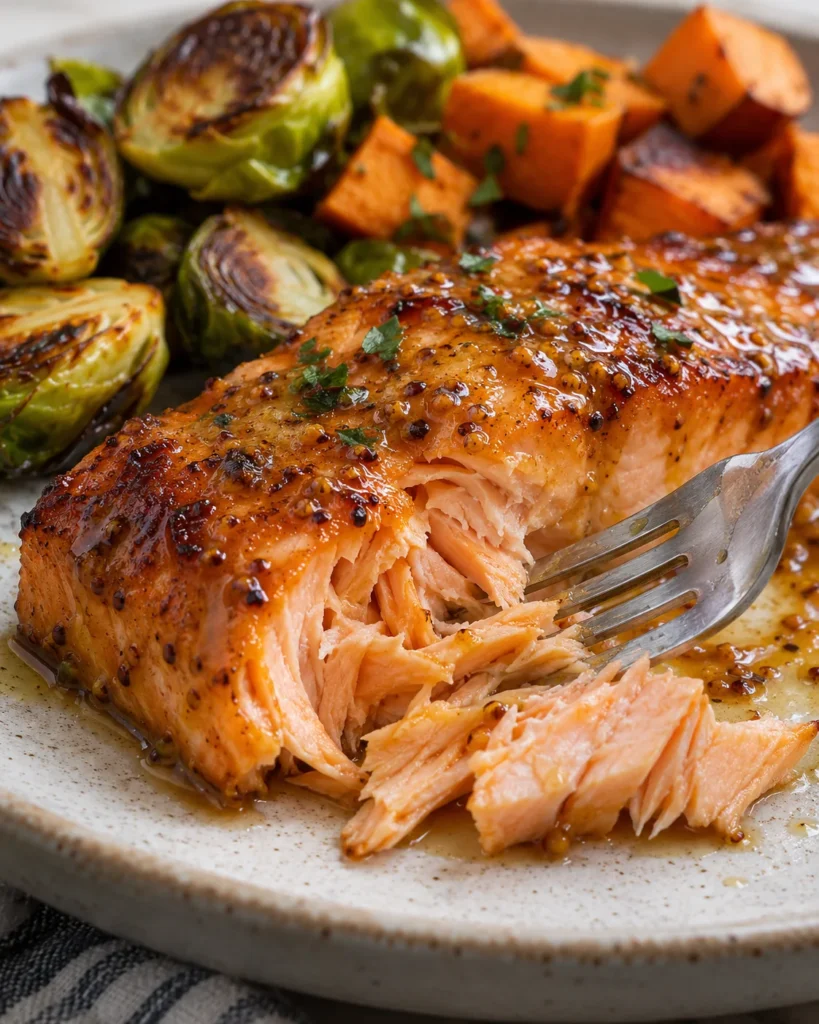
Serving Suggestions
Round out the meal with one of these easy pairings:
- Serve warm with a simple salad, vegetable, fruit, bread, rice, or fresh garnish that suits the recipe.
Storage and Reheating
Cool promptly and refrigerate in airtight containers for up to 3 days. Reheat until steaming hot. Add a spoonful of liquid if needed.
FAQs
Can I prep ingredients ahead?
Yes, prepare sturdy vegetables and seasonings one day ahead.
How do I know it is done?
Follow the texture cues and verify the safe temperature.
Can I make substitutions?
Yes, keep the total volume similar and adjust timing.
How should I reheat leftovers?
Reheat gently until steaming hot.
Can I freeze it?
Freeze suitable cooled portions for up to one month.
You May Also Like

Final Thoughts
Sheet Pan Maple Dijon Salmon with Sweet Potatoes is a practical dinner with a clear cooking order and useful texture cues.
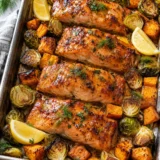
Sheet Pan Maple Dijon Salmon with Sweet Potatoes
Description
Maple Dijon Salmon is a practical family dinner with clear steps, useful cooking tips, easy substitutions, storage advice, and simple serving ideas.
Ingredients
Instructions
Step 1: Start the vegetables
Heat the oven to 425°F, toss sweet potatoes and Brussels sprouts with oil, salt, and pepper, and roast for 15 minutes.
Step 2: Mix the glaze
Whisk maple syrup, Dijon, lemon juice, garlic, smoked paprika, and remaining oil.
Step 3: Prepare the salmon
Pat salmon dry and season lightly with the remaining salt and pepper.
Step 4: Turn the vegetables
Stir the vegetables and clear four spaces on the sheet pan.
Step 5: Add salmon
Place salmon skin side down and brush generously with the maple Dijon glaze.
Step 6: Finish roasting
Roast 10 to 14 minutes until salmon flakes easily and reaches 145°F.
Step 7: Glaze once more
Brush with a little reserved clean glaze during the final two minutes if desired.
Step 8: Serve
Finish with lemon wedges and dill and divide the roasted vegetables among plates.
Pro Tips
- Cut vegetables evenly.
- Give vegetables a head start.
- Pat salmon dry.
- Keep raw-contact glaze separate.
- Cook salmon to 145°F.
- Do not overcrowd the pan.
Notes
Nutrition is an estimate and varies by brands and portion size. Cook ground beef to 160°F and poultry to 165°F.
Nutrition (per serving, estimated)
- Serving Size: 1 salmon fillet with vegetables
- Calories: 520
- Sugar: 17g
- Sodium: 610mg
- Fat: 23g
- Saturated Fat: 4g
- Carbohydrates: 44g
- Fiber: 8g
- Protein: 37g
- Cholesterol: 90mg