
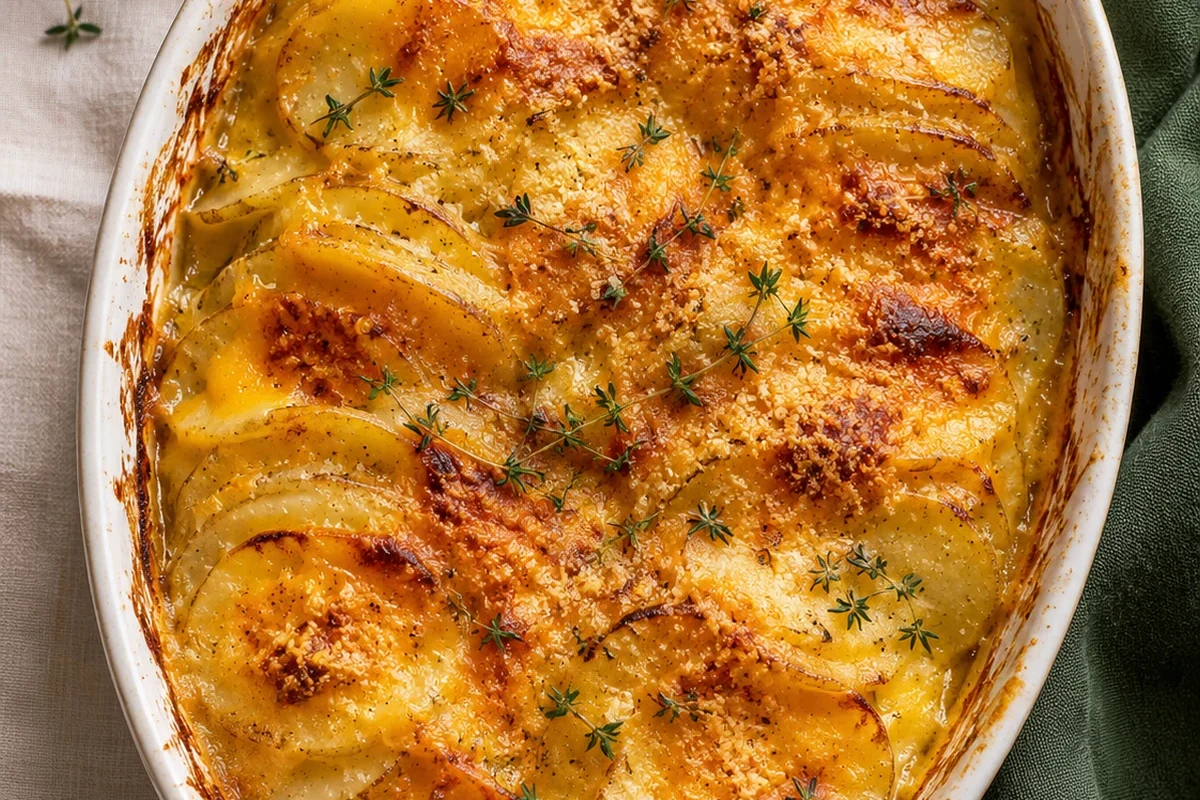
Cheddar Thyme Potato Gratin
Potatoes Au Gratin Recipe brings thin russet potato slices baked in garlic-thyme cream with sharp cheddar, Parmesan, and a crisp golden top into one satisfying dinner. This original version uses a clear cooking order, everyday equipment, and practical visual cues so the finished texture is easier to judge without relying on the clock alone.
The recipe makes 8 servings and fits an ordinary home kitchen. Uniform thin slices and a lightly thickened cream sauce allow the potatoes to cook evenly without leaving watery pockets. Read the method once before beginning, measure the seasonings, and prepare the vegetables or toppings so the active cooking stays calm and the main ingredients do not overcook while you search for the next item.
Why This Potatoes Au Gratin Recipe Works
The recipe combines thin russet potato slices baked in garlic-thyme cream with sharp cheddar, Parmesan, and a crisp golden top so every serving has substance, color, and contrast. The cooking sequence gives sturdy ingredients enough time to soften while protecting delicate herbs, greens, noodles, cheese, or fresh toppings from unnecessary heat.
Preparation is organized rather than complicated. Most of the work happens in one main cooker, skillet, pot, or baking dish, and each ingredient has a clear purpose. Browning builds savory depth, measured liquid controls texture, and a short rest or fresh finish brings the final plate into balance.
Ingredients for Potatoes Au Gratin Recipe
The exact amounts below are designed to keep the seasoning, moisture, and serving size consistent. Read through the list before substituting so the replacement does not add too much liquid or salt.
- 3 1/2 pounds russet potatoes, peeled
- 2 tablespoons unsalted butter
- 2 cups half-and-half
- 3 garlic cloves, smashed
- 5 thyme sprigs
- 1 teaspoon kosher salt
- 1/2 teaspoon black pepper
- 2 tablespoons all-purpose flour
- 2 cups shredded sharp white cheddar
- 1/2 cup finely grated Parmesan
- 2 tablespoons chopped chives
Measure the seasonings first and keep uncooked garnishes separate from raw meat. Taste only after the meat is safely cooked. When using canned broth, beans, sauce, cheese, or soy sauce, begin with the listed salt and adjust at the end because those ingredients vary by brand.
- Main ingredients: The center of this dish is thin russet potato slices baked in garlic-thyme cream with sharp cheddar, Parmesan, and a crisp golden top. Keep similar pieces close in size so they cook evenly and remain easy to serve.
- Aromatics and spices: Onion, garlic, herbs, dried spices, and browned bits create the flavor base. Measure concentrated seasonings before heating the pan, then make final salt adjustments only after meat is safely cooked and the sauce or broth has reduced.
- Liquid and texture: Broth, sauce, or water carries seasoning and controls consistency. Begin with the listed amount. Near the end, adjust by the spoonful instead of pouring in a large amount that can make the dish watery.
- Fresh finish: Lemon, lime, parsley, cilantro, scallions, or another fresh ingredient is most expressive when added late. This final step adds contrast to slow-cooked, cheesy, or savory flavors.
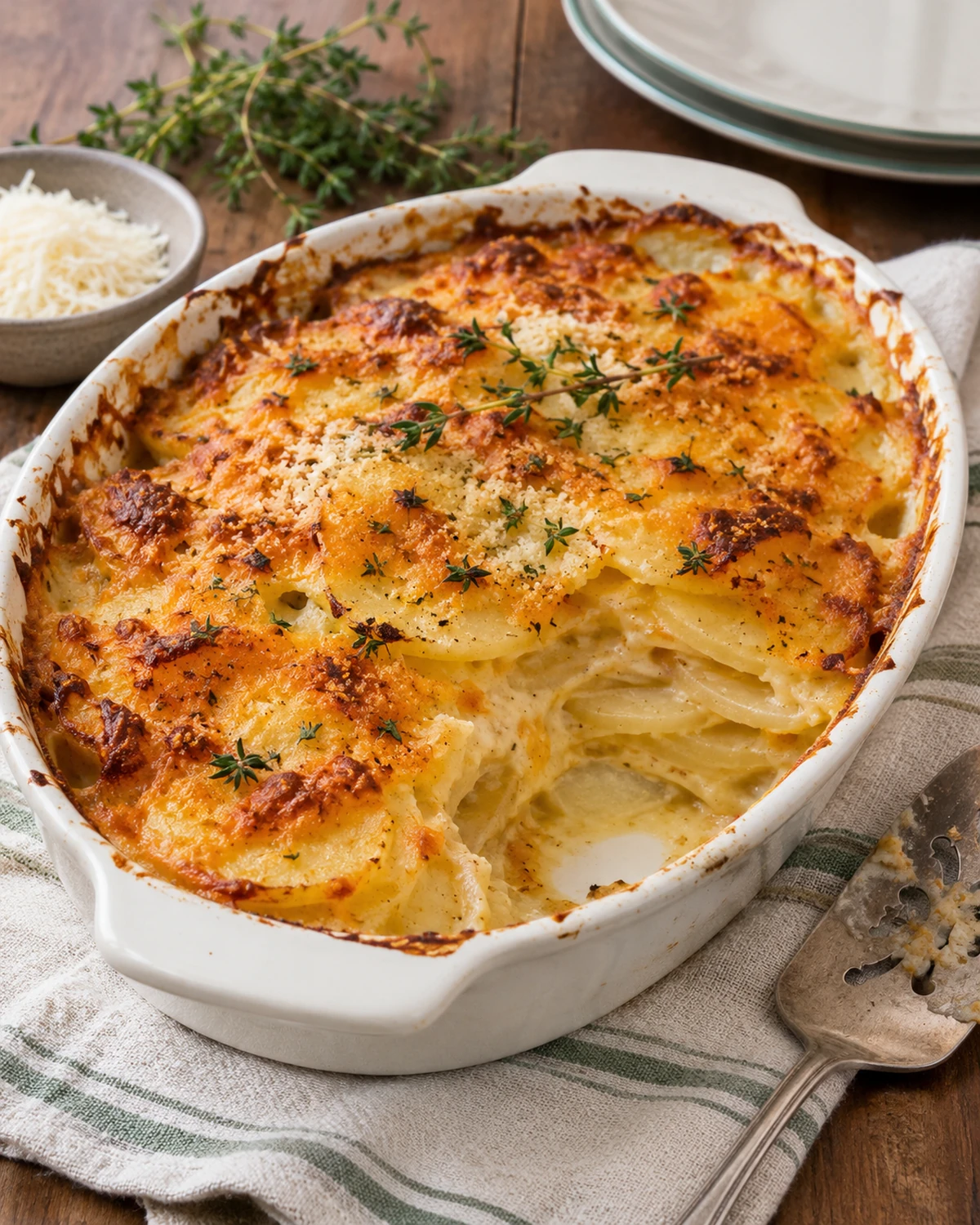
How to Make Potatoes Au Gratin Recipe
The oven method works best when the ingredients are ready before the heat begins. Follow the staged order and use color, tenderness, sauce consistency, and safe temperature to decide when each step is complete.
Infuse the cream
Warm half-and-half with garlic and thyme until fragrant, then remove from heat.
Slice the potatoes
Cut potatoes into uniform 1/8-inch rounds and keep the slices stacked for easy layering.
Thicken the sauce
Melt butter, whisk in flour, then slowly add the strained cream and cook until it coats a spoon.
Layer the gratin
Arrange overlapping potatoes in a buttered dish, seasoning lightly and adding cheddar between layers.
Bake until tender
Pour over the sauce, cover tightly, and bake at 375°F until a knife slides through the center.
Brown the top
Uncover, add Parmesan, and bake until bubbling and golden, then rest and finish with chives.
Before serving, make one adjustment at a time. A small pinch of salt strengthens flavor, warm liquid loosens a tight sauce or broth, and a measured squeeze of citrus can balance richness. Stir, taste, and pause before adding more.
Pro Tips and Troubleshooting
- Use a mandoline carefully.
- Keep slices even.
- Do not boil the cream.
- Season each layer lightly.
- Test the center for tenderness.
- Rest before slicing.
Cookware size, burner strength, ingredient moisture, and oven calibration can change timing. Use the stated range as a guide, but let browning, tenderness, sauce consistency, and safe internal temperature determine when the food is ready. If a pan is browning too quickly, lower the heat before adding extra liquid.
When the dish seems watery, give it the uncovered cooking or resting time described in the method. When it seems dry, add warm liquid gradually. Large corrections are difficult to reverse, while several small adjustments preserve the seasoning and texture.
Variations and Ingredient Substitutions
Use Gruyere in place of cheddar, or add a thin layer of sauteed leeks between the potatoes.
Keep the total quantity close to the original when making a swap. Reduce another liquid slightly if the replacement releases more moisture. Begin with less added salt when using cured meat, cheese, canned sauce, seasoned broth, miso, or soy sauce, then correct the flavor only after everything is fully cooked.
Serving, Storage, and Reheating
Serve the meal while its main textures are at their best. A crisp salad, steamed vegetable, simple fruit, warm bread, or a small bowl of beans can round out dinner without competing with the recipe. Use warm bowls for soup and noodles, and allow layered or baked dishes to rest before cutting clean portions.
Cool leftovers promptly and divide a large batch into shallow containers so it chills efficiently. Refrigerate for up to three days. Store delicate herbs, avocado, sprouts, crunchy toppings, and extra citrus separately so they stay fresh rather than wilting in the warm food.
Reheat only the amount you plan to eat. Use low heat on the stove or moderate microwave intervals, stirring between rounds, until the food is steaming hot. Add a spoonful of broth or water when rice, noodles, tortillas, or sauce has absorbed moisture overnight.
FAQ
Can I prepare the ingredients ahead?
Yes. Chop sturdy vegetables, measure dry seasonings, and prepare sauces up to one day ahead. Refrigerate perishable ingredients separately and keep raw meat away from ready-to-eat garnishes.
How do I know the recipe is safely cooked?
Use the texture cues in the method and an instant-read thermometer. Ground beef should reach 160°F, while chicken and turkey should reach 165°F in the thickest part.
Can I make substitutions?
Yes. Use Gruyere in place of cheddar, or add a thin layer of sauteed leeks between the potatoes. Keep the overall volume similar and account for a different safe temperature or cooking time when changing the protein.
What if the sauce or broth is too thick?
Add warm broth or water one tablespoon at a time. Stir after each addition and pause before adding more so the texture loosens without becoming thin.
How can I correct a flat flavor?
Check the salt first, then add a small amount of the recipe's fresh finishing ingredient. Citrus, vinegar, herbs, scallions, or black pepper can restore definition without making the food heavy.
How should I store and reheat leftovers?
Cool leftovers promptly and refrigerate them in an airtight container for up to three days. Reheat gently until steaming hot, adding a spoonful of liquid when noodles, rice, or sauce has tightened.
Cheddar Thyme Potato Gratin is easiest when the preparation is finished before cooking begins. Follow the sequence, check texture and safe temperature, and use the fresh finishing ingredient to bring the whole dinner into balance.
Nutrition per serving: 465 calories · 15g protein · 48g carbs · 24g fat
Why This Works
- A complete dinner with thin russet potato slices baked in garlic-thyme cream with sharp cheddar, Parmesan, and a crisp golden top.
- Clear texture and temperature cues.
- Practical ingredient substitutions.
- Storage and reheating guidance.
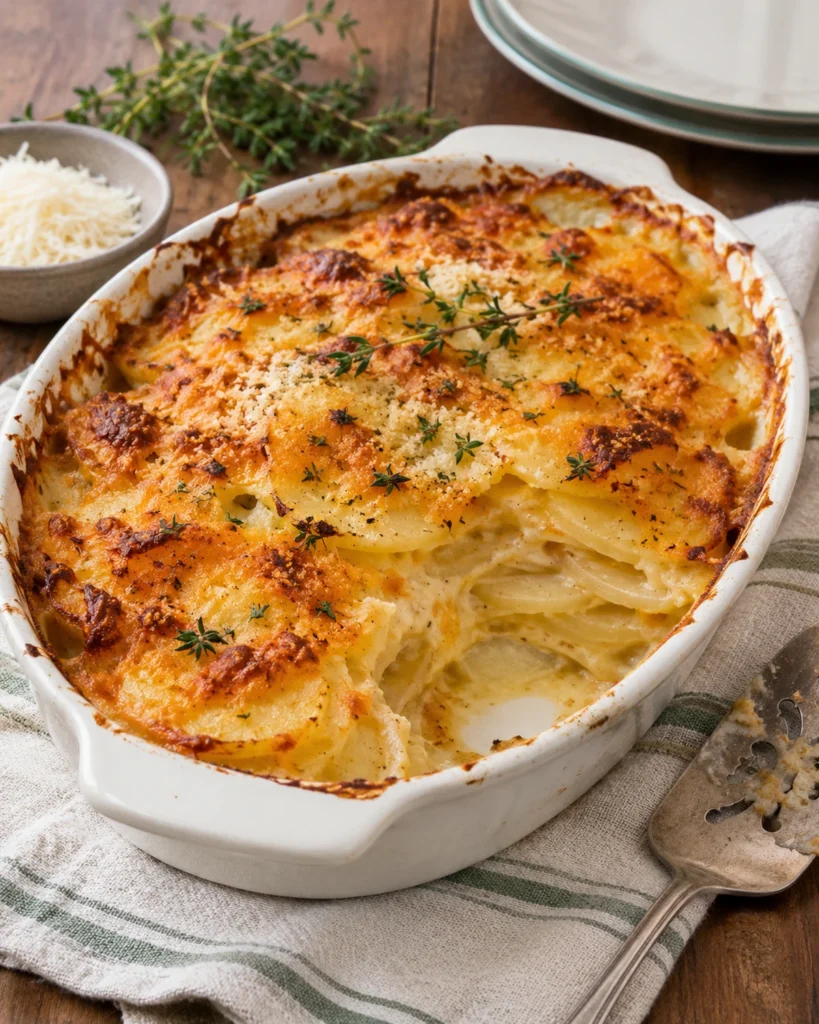
Ingredients
To make this Cheddar Thyme Potato Gratin, you will need the following ingredients:
- 3 1/2 pounds russet potatoes, peeled
- 2 tablespoons unsalted butter
- 2 cups half-and-half
- 3 garlic cloves, smashed
- 5 thyme sprigs
- 1 teaspoon kosher salt
- 1/2 teaspoon black pepper
- 2 tablespoons all-purpose flour
- 2 cups shredded sharp white cheddar
- 1/2 cup finely grated Parmesan
- 2 tablespoons chopped chives
Ingredient Notes and Substitutions
A few small changes can adapt this recipe to your taste and to what you already have at home. Here are my best tips:
- Use Gruyere in place of cheddar, or add a thin layer of sauteed leeks between the potatoes.
How to Make Cheddar Thyme Potato Gratin
Step 1: Infuse the cream
Warm half-and-half with garlic and thyme until fragrant, then remove from heat.
Step 2: Slice the potatoes
Cut potatoes into uniform 1/8-inch rounds and keep the slices stacked for easy layering.
Step 3: Thicken the sauce
Melt butter, whisk in flour, then slowly add the strained cream and cook until it coats a spoon.
Step 4: Layer the gratin
Arrange overlapping potatoes in a buttered dish, seasoning lightly and adding cheddar between layers.
Step 5: Bake until tender
Pour over the sauce, cover tightly, and bake at 375°F until a knife slides through the center.
Step 6: Brown the top
Uncover, add Parmesan, and bake until bubbling and golden, then rest and finish with chives.
Pro Tips
- Use a mandoline carefully.
- Keep slices even.
- Do not boil the cream.
- Season each layer lightly.
- Test the center for tenderness.
- Rest before slicing.
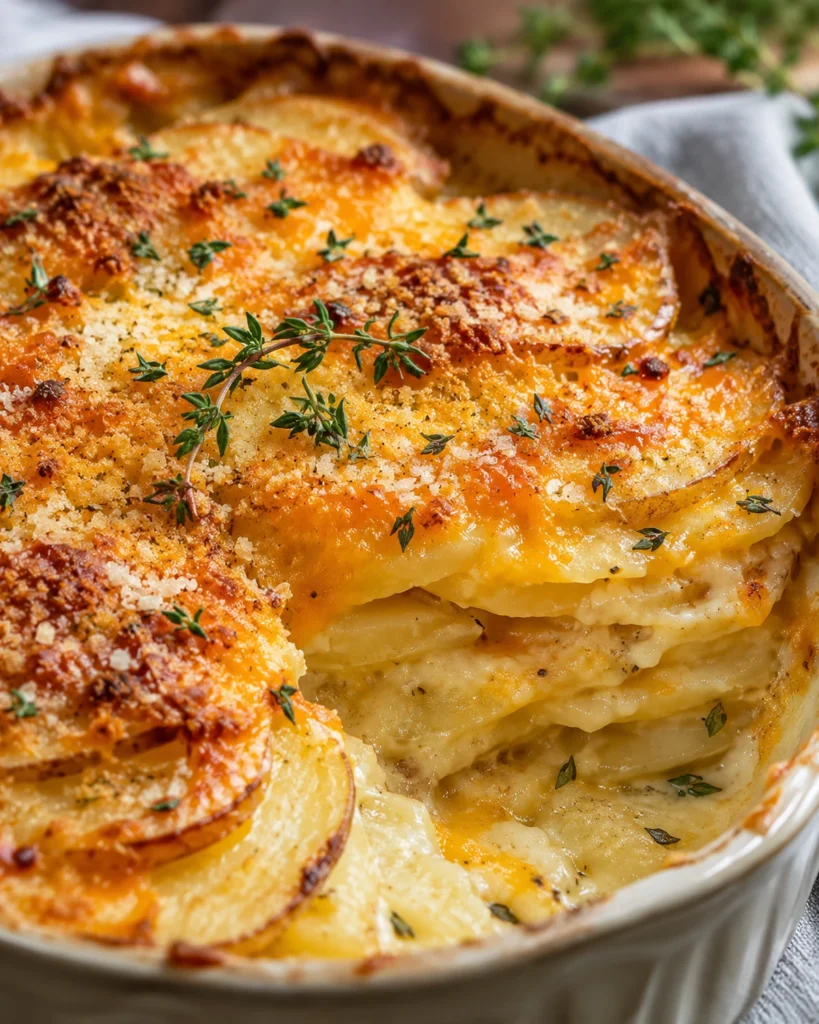
Serving Suggestions
Round out the meal with one of these easy pairings:
- Serve warm with a simple salad, vegetable, fruit, bread, rice, or fresh garnish that suits the recipe.
Storage and Reheating
Cool promptly and refrigerate in airtight containers for up to 3 days. Reheat until steaming hot. Add a spoonful of liquid if needed.
FAQs
Can I prep ingredients ahead?
Yes, prepare sturdy vegetables and seasonings one day ahead.
How do I know it is done?
Follow the texture cues and verify the safe temperature.
Can I make substitutions?
Yes, keep the total volume similar and adjust timing.
How should I reheat leftovers?
Reheat gently until steaming hot.
Can I freeze it?
Freeze suitable cooled portions for up to one month.
You May Also Like

Final Thoughts
Cheddar Thyme Potato Gratin is a practical dinner with a clear cooking order and useful texture cues.

Cheddar Thyme Potato Gratin
Description
Potatoes Au Gratin Recipe is a practical family dinner with clear steps, useful cooking tips, easy substitutions, storage advice, and simple serving ideas.
Ingredients
Instructions
Step 1: Infuse the cream
Warm half-and-half with garlic and thyme until fragrant, then remove from heat.
Step 2: Slice the potatoes
Cut potatoes into uniform 1/8-inch rounds and keep the slices stacked for easy layering.
Step 3: Thicken the sauce
Melt butter, whisk in flour, then slowly add the strained cream and cook until it coats a spoon.
Step 4: Layer the gratin
Arrange overlapping potatoes in a buttered dish, seasoning lightly and adding cheddar between layers.
Step 5: Bake until tender
Pour over the sauce, cover tightly, and bake at 375°F until a knife slides through the center.
Step 6: Brown the top
Uncover, add Parmesan, and bake until bubbling and golden, then rest and finish with chives.
Pro Tips
- Use a mandoline carefully.
- Keep slices even.
- Do not boil the cream.
- Season each layer lightly.
- Test the center for tenderness.
- Rest before slicing.
Notes
Nutrition is an estimate and varies by brands and portion size. Cook ground beef to 160°F and poultry to 165°F.
Nutrition (per serving, estimated)
- Serving Size: 1 square
- Calories: 465
- Sugar: 4g
- Sodium: 680mg
- Fat: 24g
- Saturated Fat: 15g
- Carbohydrates: 48g
- Fiber: 5g
- Protein: 15g
- Cholesterol: 78mg